Cyberpunk, According to Blade Runner

Featured

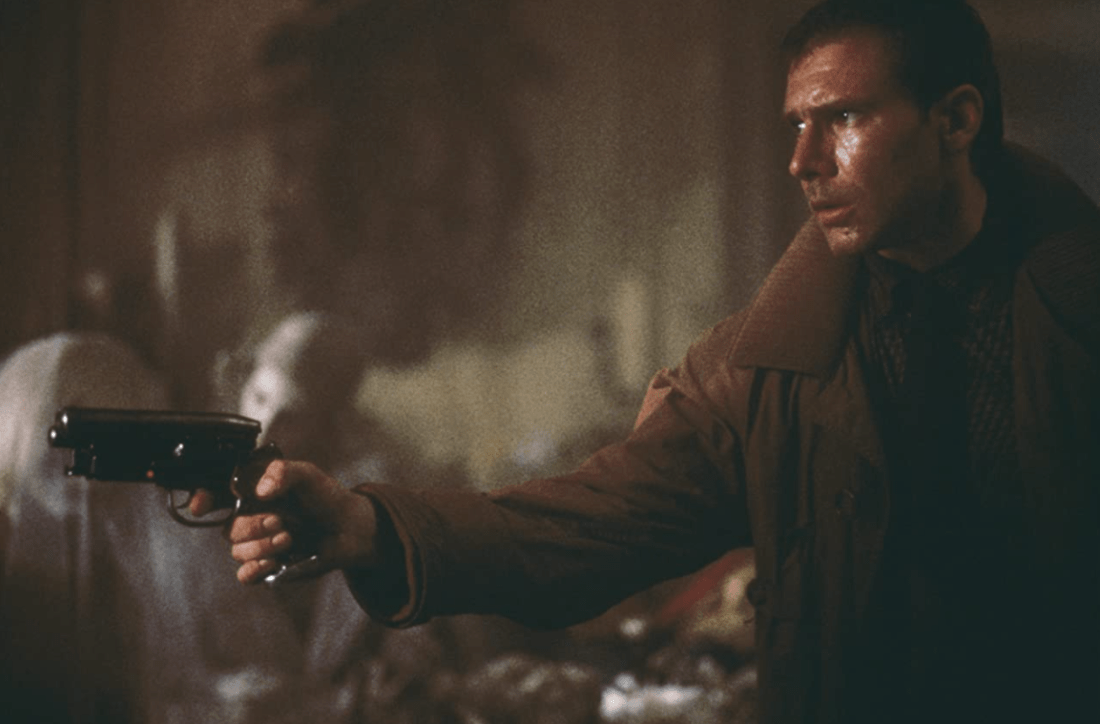
Despite itself being an adaption, the 1982 classic Blade Runner is a trope codifier for the cyberpunk genre. It takes the viewer into an ultra-capitalist world with such ease and smoothness that the film feels like an instant classic. Set in a near-future that feels both familiar and alien, it describes events “off-world” in the same instance as taking us through a street market in Los Angeles.

To be cyberpunk, it feels, is to be both present and future: how we experience the world now, in parts good but mostly bad, and taken by the scope of futurism to the extreme. There are no new tropes introduced, but rather new elements used to make us evaluate our humanity, and the human condition. This is not groundbreaking – any film producer or critic would likely tell you that every story is used to mirror the human condition. But unlike sci-fi – its closest cousin – cyberpunk does not masquerade in aliens or empires. It refuses to detach itself from those street markets that are so synonymous with Blade Runner. The scope is typically tighter and more personal. Blade Runner itself is a clear indicator of this: in the film, escaped replicant Roy Batty kills his spiritual creator, wealthy industrialist Eldon Tyrell. But the film does not show us the fallout to this, or the news or the politics that comes later (which are revealed in the opening sequence of the sequel). Instead, the story makes sure we focus on the people that make it, and what it means to them.

Tech & Capitalist Dominance

Despite that, the role and position of industrialists and future capitalism is a key to the trope. It is no surprise that Tyrell’s position as replicant slave-maker is crucial to the world and narrative of Blade Runner, and likewise no coincidence that in Blade Runner 2049, they continue his role with a new leader in replicants who takes Tyrells company over: Niander Wallace. There is a clear and intentional dichotomy between the ultra rich lifestyles of Tyrell and Wallace, and the destitute existence that we see on the streets of Blade Runner Earth.

But more than that, the stories position wealth as a means of practically engulfing life. In the original film, it is Tyrell’s company that creates and controls replicants, who are humanoid robots that are just as smart and strong as the “real” thing, but it is suggested that they lack empathy by design. Replicants are put to work as slave labour off-world, and have a shelf-life of only four years to ensure that they do not develop empathy or feelings of their own. And if they escape? That is what the Blade Runners are there for. They hunt them down and retire them, for the crime of trying to escape slavery and make a better life for themselves. It is no wonder that Roy Batty goes on a spree of revenge and desperation, to try and make the insignificant life he has been given worth living. He is not a machine that is suffering cognitive decay, which is an aspect in later cyberpunk stories, but rather he is a near-human making a very human decision to, if you will excuse the word-play, rage against the machine. A deliberate action of rebellion, and not a design flaw in his mechanical makeup. But, I digress.

In Blade Runner 2049, that divide is shown even further. While replicant technology has advanced, the need for Blade Runners is still there, and so we understand that with Tyrell’s death nothing has fundamentally changed. But rather, the Tyrell company has been taken over and its operations seemingly expanded. One of the key aspects of the film, which this piece will get onto, is the role of “Joi”, Officer K’s companion in his life. Joi is a hologram that simulates a partner of any kind for its owner, but it is also a way for Wallace Corporation to invade the home. In the film, K wipes Joi’s data from his apartment in case Wallace Co. or the police come and check its memories for evidence against him – if that isn’t a kind of mass surveillance only a degree on from the likes of Amazon or Google that we see today, then I don’t know what is. Like Tyrell before it, Wallace Co. practically takes the role of state and dictates the lives of everyone we see. Even the police force has to respond to their products and whims. Cyberpunk is the expected progression of a capitalist world, and this deliberately adds to the dark tone and misery of the piece.

Minority Disenfranchisement

As stated above, the Blade Runner films focus not on the cream of society, but on the people down below in the gutter. When you divorce it from its time period, and its economic theory, the films (and cyberpunk as a whole) are the story of forgotten people.

You can see this from the very first instance. The main characters that we hear about at the very beginning, the fugitive replicants, are escaped slaves. It is incredible to me that, before we engage our critical mind, we accept them as the remorseless and clear-cut villains, who deserve to be “retired” for their crimes of existing in a way not designed for them. We are told to see them as something completely detached from human, and instead as a company product that has diverted from its course. It needs correcting, and we are the ones who decide that. But as the film goes on, and you see how the replicants interact, and how Roy Batty especially cares for his companions, it tries to teach you something that you are not being directly told. This itself is in parallel to Deckard’s own journey, as he takes Rachael in and grapples with his own identity, which is clearly indicated by the end of being a replicant himself, more advanced than Batty.

The film ends with Roy Batty’s famous speech, about all his human experiences lost, “like tears in the rain”. It is so moving because it is so human. The audience’s view of replicants shifts, and we understand that being human is not about how you look or how you are made, but rather the experiences you have and your ability to experience them. There is empathy to Roy Batty that we recognise.

The films strike more notes than just the human-or-not notes, though, but how people live as well. There is a focus on outcasts, hideaways, and sex workers, all of whom are often ignored in film and real life alike. Women are often seen in subservient roles, there for the male gaze and their money. In the first film there is a shootout at a strip club, and in the sequel a prostitute is hired for Officer K. This is not a statement on women, but rather the reality of how society treats them instead. After criticism towards the portrayal of women as prostitutes, Blade Runner 2049 director Denis Villeneuve has said on the topic that it is not to prescribe the world view, but to describe it: “the world is not kind on women.

And what criticism sometimes ignores is that this view is not only extended towards women. It is no surprise that the men in these films are loners, often loveless and desperate for connection. It is a world engineered to make people anti-social. Likewise, in 2049, a key plot point is an orphanage-turned-workhouse for young people, showing that it is more of a class struggle than a gender one – no one is free of the late-stage capitalism human crisis. There are no green spaces in the cities, no recreation that we see in the films. In fact, all we ever see is work, empty flats, and sleep. There is no joy in a cyberpunk world, which inspires the hero on their journey for identity and personal revolution.

Identity, and the morally-grey hero

Cyberpunk, and Blade Runner, challenges the hero’s beliefs and the world they are in. Both Deckard in the original and K in the sequel are Blade Runners, but are also replicants (the former is unknown, the latter is aware). They are forced to challenge their purpose in a role where they are not only hunting other people, but one of their “own kind.” For Deckard, the illusion is harder to escape: he does it through his relationship with replicant Rachael, who at first also doesn’t know she is not human. In their relationship, and the hunt for Roy Batty, he begins to recognise himself in those that he encounters, and soon the penny drops. At the end, we are told that he, too, will be hunted. Like the rest of the replicants, this is a world where when they have fulfilled their use, they are retired.

For Officer K, the veneer comes off much quicker. The viewer already knows the possibility of officers being replicants, and so we are given a different challenge. K hunts for a child, born of replicants, which would threaten the status-quo of a human-dominant world. But rather than knowing he is a replicant, he believes he is the replicant. And his journey into identity is not about if he is human, but rather what being human is like, and the human experience as a whole. When the belief crumbles, K is left with the reality that he is not only a replicant, but one with no purpose. He hunts his kind, and lives alone save for the AI Joi that barely fills a void in his life, but through his investigation he learns that another life for replicants is possible. He does not have to be what he is, and he can make his own purpose. That is why he chooses his own path by the end of the film, and although it is not a path of hope for the world, it is one of acceptance. Like Deckard before him, he recognises who he is, and is content with his identity. Like Roy Batty, both Deckard and K refuse to work for the machine that enslaves them.
The Fallacy of Banker Bonuses

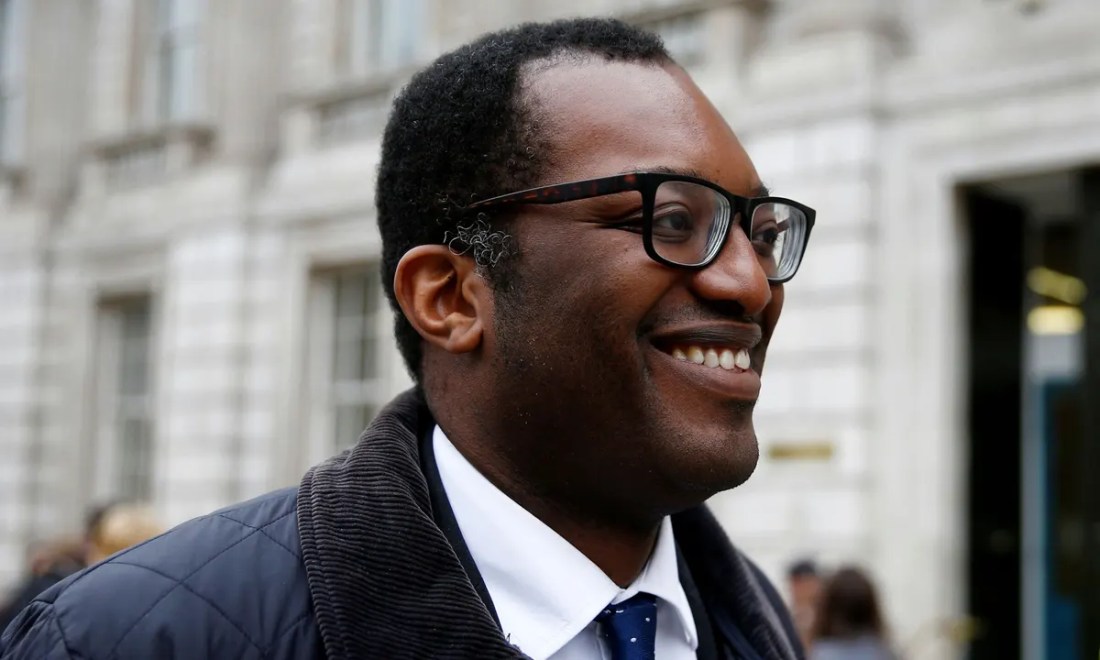
Today, there are rumours that new Chancellor Kwasi Kwarteng, the former Business Minister, will unveil more tax and regulation cuts for big bankers, in order to drive growth. What this means is that the proposed increase on business tax from 19% to 25% will not go through, and bankers’ bonus caps will be scrapped, essentially giving them no limit on how much extra they can take home.

The idea behind this is one that I’ve heard about for years, used to justify cutting taxes. It is all about making cities, and the United Kingdom in general, more appealing for international businesses. With lower taxes and higher incentives, then perhaps Bank X from Country Y might be more interested in setting up an office in the UK. This would mean that they would be paying taxes, lower than before but more than none at all, and they would be employing British people and paying wages back into the economy.

However, obviously, it does not work like that. Studies have consistently shown that tax cuts that were aimed at the rich made no discernable impact on the economy as a whole. Furthermore, they lead to an increase in overall inequality in wage discrepancy. There is no trickle-down boost for workers, nor massive investment back into the economy for us all to witness. And, there is the lost tax revenue from lower rates, that at best means that the plan does not pay for itself, and at worst lowers living conditions for all those too poor to pay, who do not have access to banker bonuses. This is made even worse in the middle of a cost-of-living crisis, with inflation up to the highest its been since the late 1970s

And it’s obvious, right? When you have a group of people with no responsibility over the management of the economy, and you pump them full of money, it should be no surprise that they do not actively boost the economy. It is like blaming an infant for not protecting the house from burglars – they never had the responsibility to do that, and frankly it’s a little strange that you expected them to.

So why is the lie of banker bonuses and trickle-down economics told? It’s simple, really: because conservative and right-wing parties benefit most from banking and big-business lobbying and funding. The UK Conservative Party model is geared towards land-owners and business-owners, who will be much more likely to have shares in banks, or might be bankers themselves. Close allies, former party members, extended family all might be part of the financial world, and the Tories know that if they scratch their back, they’ll get it back. It is more important for them to secure their present and future careers, than it is to make any substantial difference to the lives of their constituents and those worst off.

Wide Tax Cuts Will Not Save This Country

The vast majority of the Tory leadership candidates are running on pledges to cut taxes, but this is financially illiterate and blatant bribery to get them into the top job – no better than the man we’ve just gotten out of there.

How did we get into this mess?

The dire situation that this country has found itself in has been brewing for the past fifteen years, with no-one righting the ship. At the end of the noughties, the Mortgage Crash essentially threw the world economy into a spin, where banks could not reclaim the half-baked loans they’d signed off on. These were so-called subprime loans (usually in the form of mortgages) that were made to poor or desperate people at high interest rates, which made them especially risky. For the banks, this wasn’t a big issue at the time, because they’d sell the loan on at a cut price to someone else, who could later make a claim for the full cost. But when the bad loans built up and up, the bubble eventually burst, and the missing loan payments squeezed banks dry.

With banks unable to finance businesses, it fell onto governments to save them. Ones like the USA and the UK used what is called “quantitative easing”, which essentially gave banks money that they could then use to loan back into the economy. But the money didn’t come from nowhere, and needed to be paid back. The Tory government under David Cameron in 2010, with George Osbourne as Chancellor, introduced austerity politics which vastly cut funding to public spending. The idea was that with lower expenditure, the money could be repaid without having to raise taxes on people.

Needless to say: it didn’t work. Austerity was a very harmful policy that we are still recovering from today.

The UK began to come out of austerity measures in about 2017, once Cameron had left and Theresa May was Prime Minister. Things were beginning to look stable, if not still a little bleak. Unfortunately, the double-shock of Brexit and Covid in 2020 took focus away from rebuilding public institutions, and instead the Tory party became a government of fire-fighters: putting out the next crisis just in time for another one to pop up. Boris Johnson was no different, really. Even ignoring the Brexit and Covid calamities, his promises of “levelling up” and building hospitals were all hot-air, and his legacy will forever be that of a liar and a fraud.

The final body-blow to the economy was the Russian invasion of Ukraine. With Russia badly failing in its “special operations” of cultural genocide, it has routinely withheld oil, gas, and Ukrainian grains, holding the world as hostage to try and force Ukraine to surrender.

The Cost of Living Crisis

What all of this means, is that you now have companies that lost money during the Covid crisis through furlough and lost stocks that are trying to fill their coffers again. You’ve got a country that has been stuck in austerity for the last twelve years, and as such working and living conditions are far worse than they should be: the NHS is stripped bare, minimum wages and workers rights and guarantees have not kept up with the shifting economy, and there is a poorly regulated housing market that punishes the poorest and most vulnerable. And finally, you have the Ukrainian conflict, which is providing the fatal shock to an economy built on pig-shit foundations.

Let’s say that you are a supermarket, trying to buy bread made in Ukraine. Usually, you pay £20 for a lorry of it (number pulled out of my arse), but costs are rising. Ukraine is a war-zone, so drivers demand more money to travel there. Russia is withholding oil, so fuel for the truck is more expensive. Ukrainian farmers might’ve now become soldiers, so there are fewer there to help, making them more expensive too. That £20 lorry might’ve now become £25. Only, it isn’t one lorry. That might be a hundred a day, or thousands in a month. That would be a rise of 25% to the price of this one, and this is what inflation is.

Inflation right now is hanging at about 10%: so while some things might be 25% more expensive, others might only be 2% more, and it averages out. However, while things might’ve increased year-on-year by 10%, wages have not. Wages have been more stagnant, rising about 4.2%, according to ONS figures. 

So to put it another way, inflation is caused by one of two things: either through supply-side scarcity (a lack of food or fuel, etc), or through demand scarcity (not enough money to pay the rising prices). When inflation happens, people are spending more of their money and are made poorer. Because they now have less money, the economy shrinks (because there is less money in the system). When the economy shrinks too much, we enter a recession, which will lead to services being cut, jobs lost and even more misery. And, remember: there is less money in the system because when people pay for essentials, the companies then pocket the profit to make up for their shortfall, which only fuels the spiral.

Finally… let’s talk about the Tories.

Having said all that, we need to come back to the Tory Leadership contest. Practically all of the Tory candidates are scrambling over each other to cut taxes if they enter office, because that is “The Tory Way”. Some of this might work, but there are good tax cuts and bad tax cuts, right now. Cutting business and corporate taxes, like Jeremy Hunt, Sajid Javid, Nadhim Zahawi and Liz Truss have promised, isn’t going to do it. It is a bare-faced bribe to Tory business owners who might be voting for them. When corporate taxes are cut, the money is almost never invested back into the company or economy, and instead goes out in investor dividends and bonuses.

The measure of public spending, and indeed taxes and tax cuts, is not: how much are you spending, but rather: are you spending it on the right things? And that is the same with tax cuts: Are you cutting and collecting from the right places?

There are a few candidates that have explicitly mentioned cutting National Insurance hikes: Javid again, Grant Schapps, Truss again, and Tom Tugendhat; and VAT, namely Suella Braverman. These would be smarter cuts. If a poor person pays less National Insurance and VAT, then they are going to have more money to spend on groceries. Therefore, that is money that is going back into the economy, rather than being invested or hoarded. NI and VAT disproportionately affect poorer people, because of the rate-of-pay thresholds involved. Moreover, business rate cuts are not going to matter to a cleaner who is only on £18k a year, looking after two young kids.

However, we are ignoring one thing here: VAT and NI cuts are not sexy. They will not win you votes in the Tory party. And instead, we are left with a race to the bottom. Rishi Sunak has been cautious, not suggesting any cuts until the economy improves, but besides him, candidates are willing to whore themselves out to upper- and middle-class Tory party members over who can cut the most taxes and increase on defence instead, rather than actually helping real issues in this country.

The Problem with Aiding Ukraine

Unfortunately, giving Ukraine aid is fraught with difficulty and potholes. It is not as simple as sending money, guns and soldiers into Kyiv and relieving them of their Russian invaders like the end of a World War Two film. Tom Hanks isn’t going to look across the bridge as the air force flies over him, fatally wounded but content that he saw his mission through.

Like the entire Russian-Ukrainian war so far, the way in which the “West” can help Ukraine will be slow, frustrating, and full of doubts. But, there can’t be any other way.

As alluded to above, there are a few suggested tools to help Ukraine and hinder Russia. I will explore a simple list, and briefly analyse their pitfalls. As a disclaimer: I do not have fifty years of foreign affairs experience behind me, unfortunately. These are my own views, might well be wrong in places, and may well be disagreed with. But they will be, at least, realistic and cautious, which is what is required in war.

Direct Military Aid

FIrst and foremost, there is the question of NATO and the “West” getting involved militarily. This could happen in two (or three) ways: through foreign military deployment into Ukraine, or through the establishment of a No-Fly Zone.

If the “West” were to directly deploy troops to fight against Russia, it could either be done overtly or covertly, loudly or quietly. Either there would be a declaration of military assistance for Zelenskyy to help againt Putin, and soldiers would be properly flown into the country to help fight back against the invasion… or, they just wouldn’t announce it, and would enter quietly. There might be some speculation that this has already happened, through Ukraine’s “Foreign Militia” actions, where people are travelling across continents to try and help out. However, if there was a real concerted military effort, the result is still the same, and that would be for Putin to find out that other countries are getting involved. Putin has long said that if anyone interfered with the war, “you will face consequences greater than any you have faced in history”. So far, no one has wanted to call his bluff, and I think correctly. If anyone came in to officially help Ukraine, it would be to risk calling his bluff, which is a risk too great for the entire world. And if it was done covertly, it would only be a matter of time for the accusation to arise – Putin doesn’t tend to need much convincing in his paranoia. War is a game of uncertainty. You have to be able to ride the line of probability, to get the “will they, won’t they” questions right, and in this instance it is too great a cost to get wrong.

Therefore, the other suggestion is a No-Fly Zone. It sounds appealing to some, to enforce a protected area and keep Ukrainian cities from Russian bombing runs. But, unfortunately, you run into the same problem, just with extra steps. Think of war like a game of chess. First you make a move; then you watch your opponent flick through the possibilities and probabilities of their options. What are they willing to risk, or to lose, and if they can outflank or out-think you. Putin’s “consequences” line was the first move in a chess game, it sets the bar. A No-Fly Zone would be another strategic move, to bait your opponent into making a move that might be damaging for them. You are saying “you can make threats? Well, so can I”. But, ultimately, there is the ever-present issue of uncertainty, and calling the bluff. If Putin makes his move, and keeps flying over Ukraine, you have to ask the question again. Can we call his bluff, and shoot it down knowing he might go nuclear? Once again, many politicians (probably rightly) are not betting against Putin.

Soft Aid to Ukraine

Getting into softer aid is obviously a bit more nuanced. Firstly, there are a few things you can send to Ukraine in the form of aid. The main three in these situations tend to be food, guns and money. Sending food as aid here is probably going to be fairly non-problematic, because an over-abundance of produce will likely not have negative economic effects, since in a war zone like Ukraine with a strong sense of unity, I cannot imagine there is too much price gauging (although, it is worth noting that sending food aid to a country with an operating economy would massively oversaturate the market and deflate the price of produce, which would mean farmers make less money, and could not afford food elsewhere, leading to an actual famine – it is not the universal good it seems to be!)

The “West” has been all too happy to send military equipment to Ukraine, though. This is not an inherently bad idea: Russia has a more advanced military, and more troops, so Ukraine can use more weapons to arm more civilians-turned-soldiers. It is also very hard to make weapons in for yourselves, if your factories and workshops are being bombed while you do it. America especially has been eager to aid Ukraine with weapons and hardware, unsurprisingly. It plays a fine line between the US, Ukraine and Poland, but for now Russia is turning a blind eye to it and focusing on their own sluggish and failing attack. America wants to see Russia fail and help to that end, but without becoming an active member of the war. However, with a stream of guns and equipment flowing into Ukraine, it is worth asking the question: what is going to happen to it once the war ends? If Russia wins and occupies Ukraine, it isn’t so bad for the “West” because local resistance and insurgencies will most likely be using US-backed weapons and money to fight on, which is less of an issue for us. But, if Ukraine wins and expels Russia, then they’re just left with a glut of weapons and no owners. Not only that, but there will be high unemployment (with everyone’s work buildings being shot to bits), and a high proportion of citizens who are suddenly comfortable with weapons. There is a genuine fear, such as has happened in the Middle East, that supplying Ukraine today could be arming criminals and terrorists for the future. But, these are not useful questions to ask when you’re caught up in an ongoing war.

Sanctions on Russia

From the outside, it appears that sanctions on Russia are working, and they are our most effective tool to help Ukraine in its war, by crippling the Russian economy. Now, sanctions are not used and designed to simply destroy an economy. That is a useful side effect, but the main aim of sanctions is traditionally to turn the people against their leader. It is saying to Russian people “you can make all this stop, if you make him stop”. And pressure certainly seems to have been felt, too, with how Putin and his oligarch friends have responded internally. It puts a greater pressure on them to finish the war quickly, win or lose, because they cannot keep financing the great war machine if things continue.

But, there is a problem with sanctions, and with Putin. The Russian President appears impervious to pressure from below, meaning that no matter how much you punish his economy, and therefore his people, he will most likely still float to the top like a turd that won’t flush. And if you keep turning the screw and nothing happens, eventually you just end up causing pain for the sake of pain. How many services will sanctions take away from Russian civilians, who might not have endorsed the war in the first place anyway, without them being able to influence their leader and put an end to their own suffering through sanctions? It’s not like Putin can be voted out of office. And it feels like there is the slim chance that the “West” putting sanctions on Russian people who might not deserve it might well push them further into Putin’s arms.

Again, that is not to say that sanctions should be stopped, only targeted better. Sanctions should be attacking Putin’s rich friends, who can put pressure on him. That means seizing funds, freezing bank accounts, stopping their business practices and taking their yachts. How long before Russian oligarchs, who owe their jobs to Putin, begin to look at him and think “this man is no longer worth my loyalty”? It is the only way to really get to him, because it is how he keeps his power – through loyal friends and their state assets.

After The War

The “West”‘s greatest roel in Ukraine will not be now, but after the war, when rebuilding needs to take place (this is assuming that Ukraine sees off Russian forces). One can point to a variety of cases of post-war rebuilding, not least the Marshall Plan after World War Two, that was so effective in restoring institutions, and from the look of massively shelled cities in the country, an effort to do that again might well be needed. But, how it would be done is still not clear. Ukraine could receive a grant, which effectively would be free money or a loan that would not accrue interest. Similarly, it could be given nothing, as the “West” wash their hands clean of the country post-Putin. But, it will probably fall in the middle, in the shape of aid through a loan.

Loans are typically how aid comes around, but are not as alleviating as they might seem. With no real economy or infrastructure left in some large cities, and a massively displaced population, rebuilding Ukraine to how it once was will take a lot of time. Dropping a vast amount of money into Ukrainian hands might be necessary, but the following interest and debt burden it might make will shape the country for far longer. There might be conditions attached to any relief aid, including ones that might aggravate Russia again, wich they will have to adhere to in order to rebuild. They might be forced to sell off state assets to foreign parties to alleviate some of the debt, which will hinder them in the long term. They might purposefully dampen their economy to attract outside investment, selling their citizens out to keep money flowing. This is not to say that these will happen, but rather Ukraine will most likely never be how it was pre-war again.

Finally, there too is the issue of a country without its people. Skilled workers might’ve been killed, injured, or forced to seek refuge in another country for however long this conflict might last, be it months or years. It will certainly take years for everyone to return, but some of those who evacuated might not want to, perhaps because the grief is too great, or because they have made new lives elsewhere. This will certainly have an affect on the economy, where the country will suffer from a brain drain caused by the war. It will take far longer to fix than it ever took to dismantle.

All of this is not to discourage anyone watching the Ukrainian-Russian conflict with baited breath, but rather to encourage them to be realistic. There is no easy fix solution to the crisis, that can be thought up from the mind of an everyman. If there was, it’ve been deployed already. Instead, we simply have a wealth of tricky decisions, all balanced on the knife-edge of uncertainty, trying to choose the least-worst option.

Star Wars, Plato’s Philosopher Kings and the Road to Authoritarianism

The tyrant leads the masses into such a position that they elect him as a champion of the people to defend against the enemy within or without. The well-known Padme quote from The Revenge of the Sith is relevant here, as she says: “so this is how liberty dies… with thunderous applause.”

A forewarning:

This is more of an investigation into the structure of the Jedi order rather than the individual philosophies. Jedis have been connected to religions, such as Taoism, that I am not going to delve into, because that is not the point of this piece. Rather I will look at how they react with politics in a wider scope.

Also, I have not properly read the Republic, only having a broad understanding of it from Russell and other sources, so others may know better and I might not be totally accurate in places, although I will do my best to be.

Finally, there are Star Wars film and TV (Clone Wars) spoilers in here, so watch out.

Plato’s Republic

Through a conversation between Socrates and his contemporaries, Plato describes his Republic, his Kallipolis, as being made up of three social classes. There are the producers, who make what is required but do not get a say in the politics of the city. It is unclear if they choose their jobs or not, since it is suggested they do what they’re best at, but the tight control of the rulers implies that it might be planned instead. Next are the auxiliaries – the guards, soldiers who defend the city from external enemies, and protect the rulers and make sure the producers obey their decrees. Finally there are the rulers. They are thought of by Plato as “philosopher kings”, children who are chosen from the producing classes for their merit through tests to be educated for fifty years until they are ready to rule, doing so with selfless duty in mind. They are taught wisdom, courage, justice and temperance as core values, and they are also given physical education to ensure good health and a long life. The society is built around the idea that reproduction is controlled by the state; the children are separated from their birth parents and brought up with everyone as their guardians. There is also no concept of private property, with everything owned and run by the elite rulers.

So, these are children who are removed from their parents, barred from ownership and some attachments. Their education emphasises philosophical virtues of wisdom, courage, justice and temperance, and they are instructed to do what is best for the many, in selfless duty all of their lives.

Remind you of anything?

The Clone Wars and the Jedi

It doesn’t escape my notice that Plato and Star Wars both refer to a singular, all-consuming “Republic” in their universes.

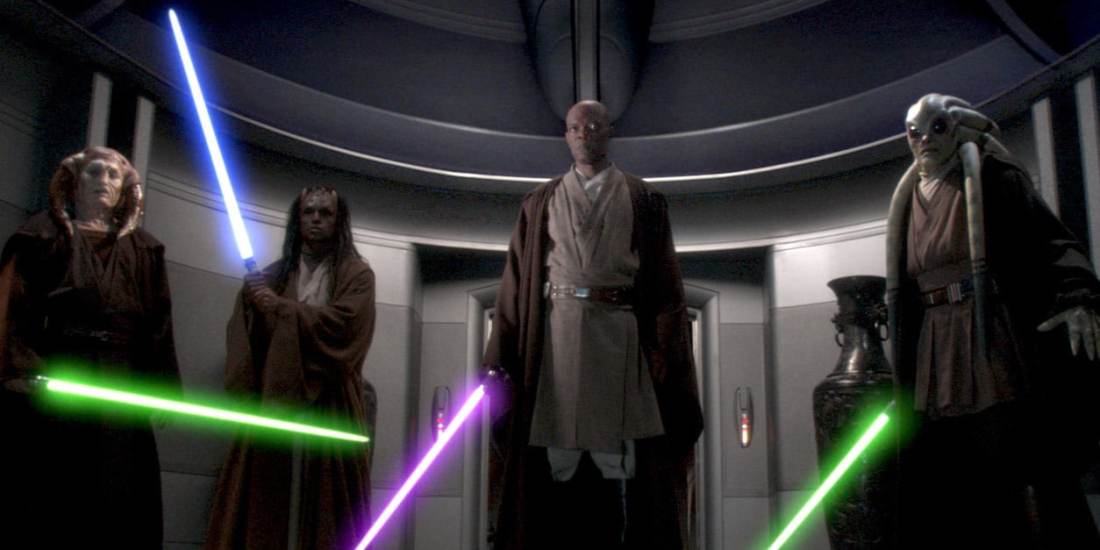
There are clear similarities between Plato’s understanding of philosopher kings, and how the films, tv shows and general canon of Star Wars represents the Jedi to us. The Jedi are selfless servants of the state, doing what is best for the people in a restrained manner and delivering justice, all with wisdom often likened to buddhism and stoicism. They are removed from their parents while young, they own no properties and barely any possessions at all. They cannot marry, cannot reproduce, and totally banned from attachment at all, even to the extent seen in the films and tv where master often is instructed to abandon apprentice (seen for example at the end of Clone Wars season 3 when Ahsoka is deserted on a planet and presumed dead, and Anakin is encouraged to not look for her). Although, I will say it should be stated that Anakin (and Ahsoka) are themselves soft exceptions to this only really for the purpose of storytelling, to give us relatable and sympathetic characters to root for.

However, the Jedi are philosophers but not kings. They are positioned more like the auxiliaries than the rulers, who themselves are the democratically-elected senate. In this way, they are bound to protect the republic’s wishes without any direct say in policies, although the lines are blurred. They are shown to be influential with senate members, while also engaging in peace talks alongside senators on the Republic’s behalf with the enemy (which the Senate vote on to ratify).

What Does a Philosopher-King Look Like?

One of the most interesting things within The Clone Wars tv show is how it portrays different Jedi within the order. Jedi are supposed to be the philosopher-kings – they’re raised to be the best servant they can be, to do what is right and just for everyone. But they still do it in different ways.

There is more than one viewpoint on how to live correctly and justly, an idea that is debated about in Plato’s Republic as much as in The Clone Wars. In The Republic, the central question is posed early-on – Is it better to live as a just man or an unjust person? It is a difficult question to answer. One suggestion in the treatise is that a man can earn a fortune unjustly, but use that money on religious donations and thus be absolved by the Gods of injustice. Matassa (2013) suggests that Plato, through Socrates et al., argued in favour of a “benevolent dictator”, where one person would rule absolutely but in the interest of the people. This is obviously unjust in modern standards, but is it better than the alternative of a just and legitimate government that fails its people? And what safeguards are there to keep them benevolent?

Plato/Socrates suggests, though, that it is better to be just, because an unjust man is forever looking over their shoulder fearing retribution for debts owed, and without friends who trust them. But Plato is incorrect that a just man, in isolation, is better off. Just people can still be trapped by unjust institutions, or unjust rules, or unjust people. A just person is only supreme in a society of justice. One loose bond and the chain breaks.

Rather than asking what is better or more comfortable, Star Wars asks us how a just and virtuous society can survive. I think it is clear that Jedi are meant to represent the pinnacle of “human” (all beings really, given that there are aliens in the Star Wars universe) nature – upholding the aforementioned virtues of wisdom, courage, justice and temperance. There are different expressions of this baked into the characters.

Yoda is a bit of a Socratic figure, asking questions about one’s nature more than prescribing to them action. He warns more than he instructs, guides more than he forces. He is the leader, but a lot of the decisions are cast by the council as a whole. On the other hand, Mace Windu is shown as a more zealous figure, especially in the third film as he goes to arrest the evil Chancellor (more on him later), although this is diluted in the Clone Wars show to make him more sympathetic to follow. His justice-by-any-means approach casts him as a bit of a loose cannon to the viewer, even against the corrupted Anakin in that scene. In fact, his death is partially due to the fact that he carried on with his mission, despite the better temperance or wisdom to stop, fuelled by his desire for justice.

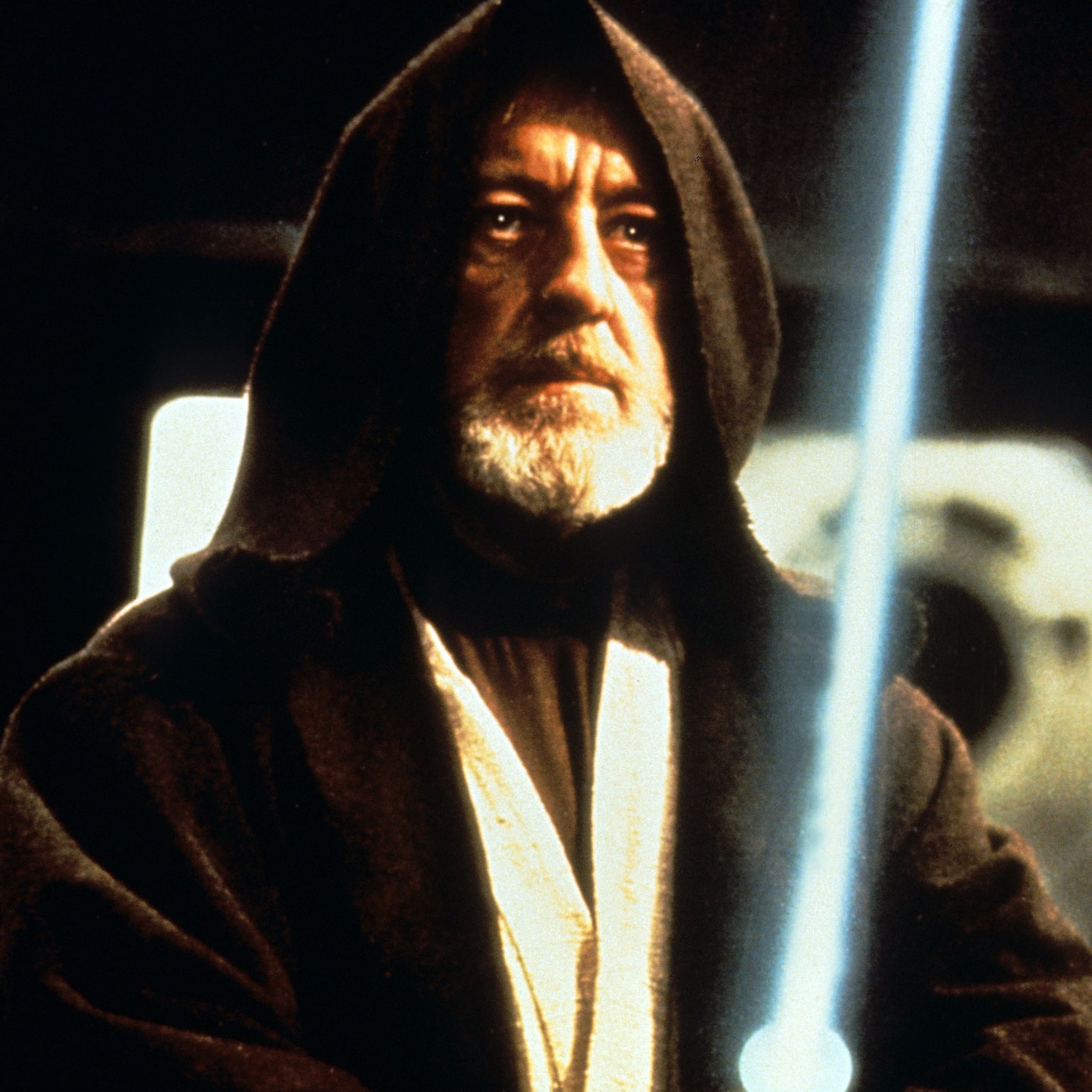
Obi-Wan Kenobi is more of the standard jedi, more of a foil for Anakin than anything. He is calm, cautious, steadfast. He doesn’t always make the right decision, but he is caring and trusting. He is one of the most rounded figures in the Jedi, when discussing the four virtues above. His master, Qui-Gon Jinn, offers a more interesting view on justice. Qui-Gon knew that the Republic was rotten and the Jedi were blind to it, and he is often cited as a rebel and maverick. It is hinted at in the films, such as in the first film when he defies the Jedi council order to train Anakin, and in the second when Dooku suggests he’d have joined the Separatists. He raises the question of: is it better to work within a good, but flawed, system; or to do more good outside of it? It is a question on justice that will always be relevant.

As suggested earlier, Anakin and Ahsoka are more difficult to dissect in the same way. They carry the audience with them, so they are bound more by narrative rules than philosophical ones. Especially with Anakin, they represent a lack of temperance, showing a headstrong nature and wearing their emotions on their sleeves. They refuse to understand the restraint that the Jedi desire, and while their emotions make them more active characters, they also lead them to danger. Anakin shows the root of corruption, the appeal of authoritarianism.

Political Decay and the Road to Authoritarianism

Plato describes the life-cycle of politics, moving through timocracy (rule by the landowners) to oligarchy (rule by the select few), to democracy (rule by the masses) and finally tyranny (rule by the tyrant), considering them all flawed. He suggests that democracy ensures evenly distributed power (at least in theory), but there is still a desiring element left over from the time of oligarchy that is undisciplined and unrestrained. The populist nature of democracy leads to the rule of the mob, fuelled by fears of oligarchy, which is prime for the taking by a powerful figure, who becomes the tyrant. The tyrant, he suggests, removes the safeguards on liberty and ensures their power is absolute to remain in control, even provoking war to consolidate his position as leader. The tyrant leads the masses into such a position that they elect him as a champion of the people to defend against the enemy within or without. The well-known Padme quote from The Revenge of the Sith is relevant here, as she says: “so this is how liberty dies… with thunderous applause.”

And as suggested, that path to tyranny is reflected in Star Wars. It shows not just the death of democracy, but the death of the philosopher-kings too. These philosopher-kings can only exist in a perfect system, because as shown above, a just man can be guaranteed to thrive only in a just system. Over the history of Star Wars, the Jedi become complacent and self-satisfied, despite the mounting threats. Even before the films, Count Dooku leaves the order to help revive the Sith, and after that? In the tv shows at least two Jedi turn out to be traitors, and they cannot smell out the deception in some of the senators. One of the prime examples is the Jedi Barriss Offee, a former friend of Ahsoka Tano who frames her for treason in order to undermine the Jedi. She does this not to become a Sith, but because she believes the Jedi have become warmongers during the Clone Wars. And that is the poisoned chalice of power that ruling classes have to grapple with. When they are kept in power by something that is bad for the people, they cannot work for the interest of those that they’re meant to protect. As with all elite classes, the Jedi develop vested interests, as would the fabled philosopher-kings. If the elite class is not legitimised by the people, they will not always work in the interest of the people. The Jedi are peacekeepers, but are made generals in the Clone War – they are defined by the conflict, so to suggest they are warmongers suddenly has some bones to it. And even in the films they are completely blindsided by the all-powerful Chancellor and his army of clones, as they wipe the order out. Perhaps it’s just hindsight, but alarm bells should be ringing when a man grants himself emergency powers and grooms the Jedi you suspected of being susceptible to the dark side.

The Jedi are not seen in the same way again, as an order of wise philosophers helping to govern and protect the people. In Yoda, Obi Wan and Luke Skywalker later, they become harbingers of an uncertain future, a weathervane for trouble on the horizon. They warn more than instruct, advice more than govern. Their institutional failings hang over them for years after, a reminder of their complacency and their lost way from the ideal they set themselves. The philosopher-kings fall because they cannot exist. They are the most just people, but without a home, exploited by the unjust and those that discard the values they hold dear. As is noted in The Republic, the Kallipolis cannot ever exist.

Ashitaka – The Anti-Nihilist Hero

“While religion is no basis for ethics, neither is nihilism, which would suggest a worldview of lawlessness and “fuck around and find out””

Princess Mononoke is my favourite Studio Ghibli film. I’m not sure it’s the best one – it battles for that title with the likes of Howl’s Moving Castle, Kiki’s Delivery Service and Spirited Away – but it’s the one that I connect to most strongly. Many of the Studio Ghibli films share a lot of similarities, with chief director and writer Hayao Miyazaki often including strong female leads, a grey-morality villain rather than outright-evil, and strong themes that touch upon anti-war or peaceful resolutions. It does these things well, with leading women in Sophie from Howl’s Moving Castle, Chihiro/Sen in Spirited Away, the eponymous Kiki with her delivery service, Fio in Porco Rosso, and Satsuki in My Neighbour Totoro, to name a few. Similarly, the villains range from desperate antagonists to practically nonexistent. Kiki’s Delivery Service and My Neighbour Totoro (spoilers) don’t really have villains, with the third-act crisis being depression and illness respectively. Princess Mononoke does share these traits too – San is a strong lead beside Ashitaka, and the villain Lady Eboshi is not totally evil.

Mononoke Hime, Gozen Eboshi

However, thematically, Princess Mononoke is darker than other Studio Ghibli release, rivalled (but not topped, in my opinion) by only one other film, Castle in the Sky. The film centres itself in an industrialising Japan that is fighting over the balance of nature versus industry, tradition versus progress, and very much for the viewers it is peace and healing versus greed and conflict. I think it’s worth noting that, although they don’t explore it in the same way, other Ghibli films made in the same time period also focused on ideas like this too. Between 1997 and 2004 there were three films released that were written and directed by Hiyao Miyazaki: Princess Mononoke, Spirited Away and Howl’s Moving Castle, and they all entertain anti-western themes among them (although this was also coming through in 1992’s Porco Rosso, where the antagonist is a very annoying American who wants to be a future President called Donald Curtis…). The first, Princess Mononoke, shows us a war between the natural world and the industrial one, and the chaos that reigns when it is thrown out of balance and the Forest Spirited is murdered and decapitated to fulfill the Emperor’s greed for immortality. Spirited Away presents us with anti-consumerist themes, starting from Chihiro’s parents being turned into pigs for eating food that wasn’t theirs; to the river spirit that had turned into a disgusting mess because its essence had been plugged by a bicycle that had been thrown into its river; and to No-Face, the mysterious and misunderstood spirit, who tries to make friends by giving away mountains of gold, which the bathhouse workers are all too keen to snap up. Finally, Howl’s Moving Castle is perhaps the strongest example, where the ominous spirits hunting Howl down are made of an black oil consistency, the eponymous character is out fighting both sides of a war he refuses to be drafted in in a self-destructive attempt to stop the conflict and, when at the end we find one final twist in the plot, peace is brokered when they finally realise what a frivolous reason to fight it was. Howl’s Moving Castle is littered with juxtaposition of peace and bombs, kindness and gunshots, every-day living and soldiers, and it is no coincidence – it was made as America went to war in the Middle East, capping off five years of filmmaking that tried to push against all the West represented. I could write about any one of these films, and perhaps in the future I will some more.

Despite the conflict that Howl and Sophie face, it is still eclipsed by the violence in Princess Mononoke. The film starts with a battle, as the hero Ashitaka protects his home town from a boar that has been turned into a demon, pulsing with disgusting worm-like toxic tendrils. It is during this that Ashitaka is struck on his right arm and cursed, with the elders telling him he does not have long to live. And he is faced with a choice: does he go looking for a cure, knowing that if he leaves his home, he can never return?

Now I’m sorry, but I need to force upon you another tangent. Because this post is not only about a film or a hero – it is about philosophy, and what we can perhaps learn from that film or hero. In particular: nihilism (and in particular, Friedrich Nietzsche’s views on it). Nihilism is sometimes mischaracterized as just misanthropy, which is the dislike of generally all people (see House, MD. as an example). Misanthropes might be nihilists, but they are not the same thing. Nietzsche began to think on nihilism as a response to his one true hate, which was religion and Christianity. The foundation to these is the idea that what you do while you’re alive on Earth matters, because you will be rewarded in heaven (or condemned to hell). However, he was an atheist and didn’t believe in religion, God, or an afterlife, so he rejected this view, suggesting there was “tension […] between what we want to value (or need) and how the world appears to operate”. He went further, understanding that those who believe in an afterlife will put themselves through suffering if they believe that will take them to heaven – and therefore, giving the idea that, in religion, there is meaning in suffering. He instead suggested nihilism as the alternative to religion, which tells us the opposite: there is no meaning in suffering, which itself lends itself to the mindset of depression and incels who believe that life is supposed to be meaningless and filled with suffering. This is where we typically get the idea that nihilism is about apathy and misanthropy, which is not necessarily the case. This is also where one of Nietzsche’s best known quotes comes from, “God is dead, and we killed him”, because Nietzsche believed that Christianity was not a strong enough value system for people to judge themselves by.

However, nihilism isn’t the end of that tricky philosophical road. As suggested, while religion is no basis for ethics, neither is nihilism, which would suggest a worldview of lawlessness and “fuck around and find out”. Nietzsche suggested a third option, which can be called “active nihilism”, but I am going to call “anti-nihilism”. Anti-nihilism is the idea that if you no longer follow religion’s doctrine of ethics and values, you can make your own. Rather than collapse in on yourself in a meaningless world, you can do what you think is right and live by your own values. Before I get back to the film, it is worth mentioning that what Nietzsche wrote about “active-nihilism” was sort of misinterpreted by the Nazis into their creed of fascism, which is not good. He wrote about the journey of a “free spirit”, someone who sets their own values and practices active-nihilism in a way that he likens to an artist, who then becomes an ubermensch. The iconography of an ubermensch entered Nazi ideology thanks to Friedrich Neitzsche’s sister after he had died, where it was manipulated to invoke Aryan supremacy.

Ahhh, I’m glad we got the Nazis out of the way so we can focus on the film now.


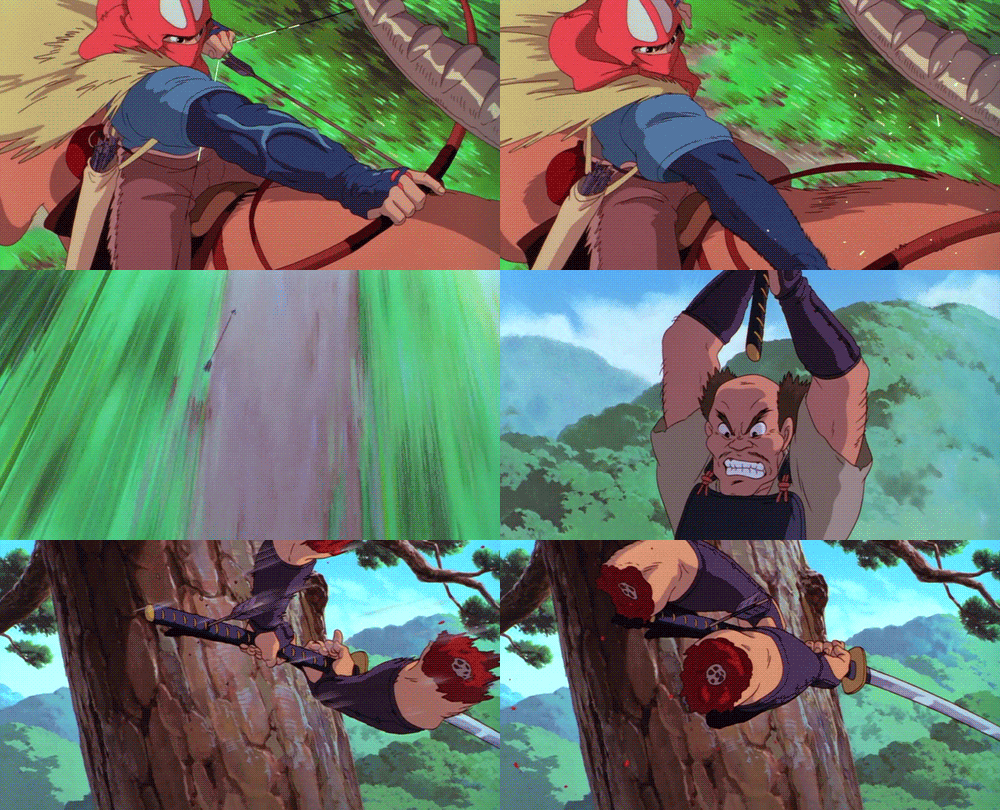
We left our story, Princess Mononoke, at the end of the first act. It is the typical Point Of No Return in a story, where our character has to step over the threshold and embark on their journey. But Ashitaka is different, because he has been cursed. While he lived in his traditional village, he could believe in spirituality and religion as his ethical system. That was shattered for him the moment he had to cut off his ceremonial top-knot and leave in the middle of the night, no longer protected or bound to the system he once believed in. He leaves his village as a nihilist, where for saving his town, he was cursed, not rewarded, and he will surely die if he does not find help from somewhere. And his cursed arm reflects this too, as it takes a mind of its own. It bulges with strength, uncontrollable for Ashitaka its host, and is so chaotic and strong that, early in the film, he takes off both arms from a man’s body with a single arrow shot. He is a stranger to this new world, no longer sheltered and protected.

Mononoke Hime, Ashitaka

But, he doesn’t stay that way. Knowing he will soon die, he decides to help people. After a bloody battle the night before, he finds an injured stranger in the river, and decides to take him home so that he can get help. They go through the sacred forest, where Ashitaka is told he can cure his arm, but he does not stop until they get to their destination, Iron Town. Throughout the film, Ashitaka continues to do good things for people: he helps the women in the iron forge, he protects San, the girl who attacks Iron Town, and he looks out for San and Lady Eboshi both through the conflict. And, when he is nearing exhaustion and death, he is rewarded. The film starts with Ashitaka sacrificing himself to defend his town by killing the demon, and he continues doing good, selfless things until the end. He does not ask for anything, he doesn’t really act like he deserves anything either. He does good things for the sake of doing good things, and he is rewarded when his curse is lifted.

Ashitaka represents anti-nihilism in the way that he is faced with the worst of life’s hardships, and he does not break or falter. He is surrounded by characters who are influenced by greed and revenge, and he could very well follow down that road of nihilism too. But he doesn’t. He forges his own path of respect and kindness, and against the odds he is rewarded for it.

Malcolm & Marie – Formless Anger Presented in Black and White (5/10)

Malcolm & Marie come home from the premier of the film he wrote and directed to mixed feelings. Malcolm (John David Washington), on what he calls the best night of his life, is on top of the world, elated. He is the king tonight, who everyone is talking about. But Marie (Zendaya), on the other hand, is disappointed, for the opposite reason – no one is talking about her. Or, at least, her partner Malcolm didn’t. He forgot to include her in his “thank yous” at the premier, despite remembering hundreds of others, and she feels forgotten and disrespected. And from here, a one-hundred-and-six minute argument launches between the two, cataloguing a night where the truth comes out in their relationship.

The film, released on Netflix, has its ups and downs. The writer, director, producer Sam Levinson brings some of his brilliant directing vision and musicality from HBO’s Euphoria to play, with stunning shots throughout the film. One of the first is a minutes-long loop around the living room while Malcolm elates to Marie about the evening, following him from outside, or focusing on Zendaya smoking while he continues on his victory lap, all in a single shot that keeps us in the moment with them. Or later on, another still long shot while Malcolm runs around the house looking for his wallet and phone, the camera catching him while remaining still. And the final shot, where Marie’s empty bed is in the foreground, and she is in the background outside, as Malcolm searches for her. Not only the visuals, but the music used is strong too. It is a fundamental part of the film, where a new song being played often means the end of a scene and a breather, until the next confrontation. The opening scene with them playing James Brown was a delight to me.

Furthermore, the acting was brilliant. Zendaya rarely puts a foot wrong here and any other time, and John David Washington, who I admit I haven’t seen elsewhere, is strong too. You can dig into this with the strength of the long-takes in the film, as they pour themselves out to each other, not letting us go with a cut if they can help it. Zendaya has the best moment of the film at the end, where she pleads to John David’s Malcolm not to take her for granted any more in a powerful monologue that seemingly puts the conflict to bed, before they themselves fall asleep.

Despite these successes, though, there is more bad than good. Get ready.

To touch upon the actors again, while their performances are both strong, it is still too tough a challenge for them to carry the entire film on their own backs. The back-and-forth between the two – and only those two – became tiresome by the end of the film, where I was glad it was over, or else go about the same argument again.

The central point of the film, the argument, is also a point of issue. Usually, in a film based on an argument, you are meant to be able to connect with both sides of the issue, I find. They’re meant to both be half in the right, to both give the conflict steam and give the characters some redeeming qualities. Not here though, no. Instead, it is given to us as in John David’s Malcolm is bat-shit mad, bordering on abusive. He narcissistically goes through his various successes from the premier that night, every word good or bad said about him, and is completely oblivious to any of Marie’s potential issues, as if she should be fuelled solely by the light of his halo. Having Malcolm both successful and grating as a character is not easy to root for, so from the offing the viewer finds themselves rooting for Zendaya, as she dutifully makes him some mac and cheese for their late night without dinner. What makes it worse is the fact that with any sound of dissent or criticism, Malcolm shouts across the house that Marie is “unstable”, as if there has never been any issues before with a man dismissing his girlfriend’s issues as “bitches be crazy”.

And so, the rest of the film follows suit. We are encouraged to root for Zendaya’s Marie, but the film amounts to simply John David’s Malcolm hurling abuse at her for the rest of the night, save for a few moments of closeness as they catch their breath. That in itself leads to another issue – consequence. After the verbal sparring match we are forced to sit through, the film ends on the strong note of a heart-felt monologue of Marie, as described above. But, it is worth noting that Malcolm still doesn’t thank Marie. He says sorry, he tells her he loves her, and they go to sleep. He does say the words thank you, but it feels like it is because she turned off the bedside light, and not for any relationship-splitting argument they had that night. It is a really baffling omission, where the film says to you “this man is in the wrong, and his girlfriend puts him right. And he still doesn’t apologize for ever being wrong”. For ranting and abusing her the entire night, he is rewarded with a good night sleep.

And, let me tell you, the ranting is a real problem in the film. Like, if the conflict was fair and resolved well, that’d be one thing. But the incessant ranting that Malcolm displays is painful, to say the least. I praised the film for its long-takes and actors, but this is the other side of that coin. Malcolm, a man fuelled by selfishness and a need of validation, rants in the beginning long-take about a perceived racial issue with a female reporter at the premier (which itself is flawed, but I’ll let the guardian’s review of the film take the heavy lifting there: https://www.theguardian.com/film/2021/feb/05/malcolm-and-marie-sam-levinson-netflix-john-david-washington-zendaya), and again when that same reporter publishes a review of his film, which is reads at home. Now let me tell you, I almost turned off the film on the second instance there. I think it is the fault of Sam Levinson’s writing rather than John David Washington’s performance, but having Malcolm practically scream and shout about the review, and his reaction to it, for a solid five minutes or so, was exhausting. I wanted to turn off the film – imagine if it had been in a theatre?

What we’re left with at the end of this film is a visually stunning film pretending it is about anything meaningful. It is presented in black and white presumably to give the air of maturity, even though it tries to create a false equivalency between Malcolm’s inability to handle criticism with Marie’s former drug addiction struggles. There are more issues too, that I won’t touch upon.

Malcolm & Marie is best summed up by a Zendaya line near the beginning of the film, where she says “I promise you, nothing productive is going to be said tonight”.

“Moral Bankruptcy” and a Disaster Year for Schalke 04

Once, Schalke were one of the best teams in the Bundesliga. Now, they have gone twenty-eight games without a win, a run stretching back to the middle of January, 2020, and is threatening to break the previous record of thirty-two winless games in the 65/66 season. It has been a chaotic year for Schalke, where financial woes and poor decisions behind the scenes have reared their ugly heads on-pitch too – and all of this exacerbated by the COVID-19 pandemic.

The Royal Blues (or Die Konigsblauen, if you’re civilised) started the year with David Wagner as manager, and the 19/20 season had gone well for them up to that point. Their strong opening to the season saw them win four of the first six games, and a further five games after that, before they faced Bayern Munich at the Allianz Stadium on the 25th of January, 2020. They lost 5-0. A drubbing against the perennial champions of the modern Bundesliga era isn’t too noteworthy or surprising, although it is unwanted, but it was the loss that sparked an awful year in football for Schalke. Before that game, they were in 5th position – after holding onto 6th for a while, they ended the 19/20 season in 12th place. Although the big loss to Bayern Munich was sure to have been a factor to their poor finish to the season, it was by no means the only one. They suffered injuries to key players like Salif Sane, Suat Serder and Omar Mascarell, and goals seriously dried up for the end of the campaign, with them only scoring seven goals in the remaining sixteen league games.

Their summer only made things worse, with a bleak finances looming above them. At the end of the 18/19 season, they had announced debts of around €200m, which put them in a dire situation. The worldwide COVID-19 crisis made it worse, with fans no longer being able to come to games, and the club could no longer rely on ticket sales. In an unpopular bid to make ground on their debt, the club let go of some of their lower-paid staff, and refused to refund fans’ season tickets for games that they were not able to watch with COVID restrictions in place – a move that the Ultras Gelsenkirchen group called “moral bankruptcy”. Players took a pay-cut to help the club, but the damage had been done. A number of key players leaving the club for far less than their real value also damaged Schalke’s future: young starting keeper Alexander Nubel left for Bayern Munich on a free transfer, robbing the club or any money they could’ve gotten for him in a transfer; Jonjoe Kenny, their on-loan starting right-back, moved back to his parent club Everton; and midfielder Weston McKennie went to Juventus on loan for a small fee of €4.5m – although this has an option to buy for €18m, which I expect will be activated in the summer. Other regular starters, like Guido Burgstaller and Daniel Caliguiri, also left for free transfers in the summer. They signed one player for money – €1.5m for Goncalo Palencia, although it is only a loan, and they will lose him by next summer. Generating only €4.5m for five of your best players is an incredibly worrying sight, and a sign of things to come.

There were calls for manager David Wagner to be sacked over the summer, but sporting director Jochen Schneider showed faith in his man and stuck with him. Until they lost their first two matches of the season, and he was sacked. It was perhaps unfortunate that they met Bayern Munich again for the season opener, and with former Royal Blue Nubel in goal, they thrashed Schalke 8-0.The next game, Schalke lost at home 3-1 to Werder Bremen, who were in danger of being relegated the year before. That was the game that saw David Wagner leave, and soon after his replacement Manuel Baum came in, along with former Schalke player Naldo as his assistant manager, although things have arguably only gotten worse. Losses and draws continue to stack up for the side, and off-pitch drama is preventing them from making any turnaround at all. Meanwhile, thirty-six year old striker Vedad Ibisevic, who came to the club on a free transfer from Hertha Berlin in the summer, was suspended after a bust-up with Naldo on the training ground, with his contract scheduled to be terminated at the end of the year. However, Schneider says that it was not solely because of the training ground incident, but rather longer-running issues at the club.

Ibisevic is not the only player who has been suspended this season, though. Amine Harit, a star winger, had been suspended by the club after he was substituted in a game versus Wolfsburg and disrespected the manager in frustration. He has since returned to training, and had signed a contract extension at the end of 2019, but his future must be looking less certain now. Furthermore, midfielder Nabil Benteleb’s contract has also been suspended in a bizarre turn of events. In the morning of November 24st, the club tweeted out Bentaleb’s birthday – but by the end of the day, they had deleted that and instead suspended the player for disciplinary reasons, and told him he could leave for a new club by the summer at the latest. Further injuries have hampered the side, with both goalkeepers Frederick Ronnow and Ralph Fahrmann unable to play, forcing them to start third-choice Michael Langer in a 3-0 loss to Wolfsburg.

Schalke are stuck to the bottom of the Bundesliga table, with relegation a very real possibility for the side that had been active in the Champions League in the previous decade, and even runners up in the 17/18 season. Their last game of the season before the winter break is on the 19th of December to Arminia Bielefeld, who are only two places above them at 16th, and have won only twice in twelve games. Even against weaker opponents, it looks doubtful right now that Schalke will get a win from the game, such has been their appalling year. If they continue to not win games, then the record-breaking fixture – the thirty-third game without a league win – would be on the 20th of January, 2021 versus Koln at home. If they fail to win that too, they will be making history for all the worst reasons, and relegation will surely be the future of Schalke, leaving the Bundesliga for the first time since the 1990/1991 season.

Why Supergiant’s Hades is Game of the Year

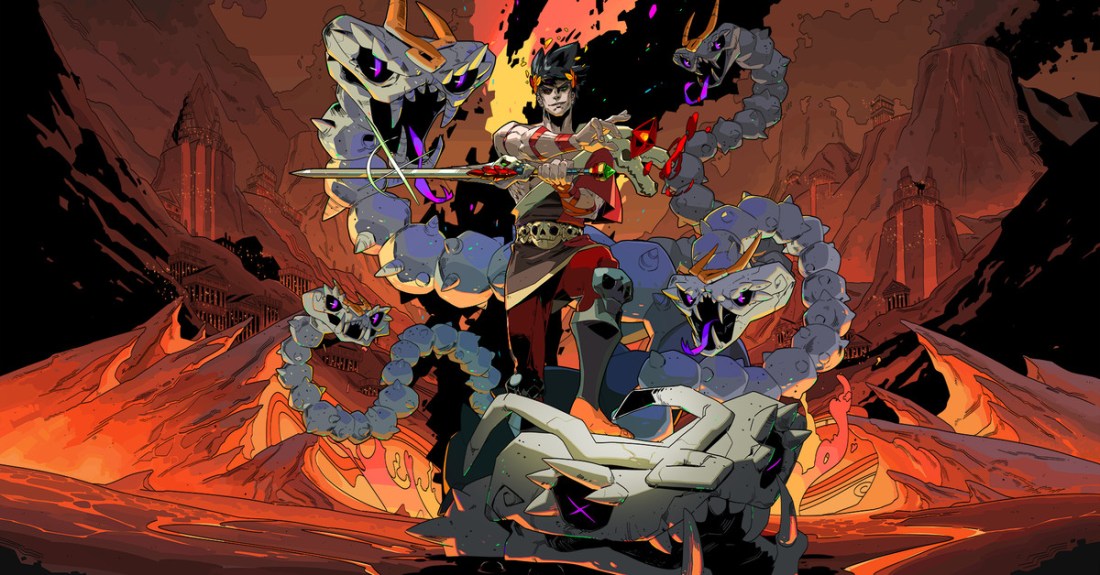
Hades, the indie game by Supergiant Games, is being critically hailed, and for good reason. Off of the back of an “Indie Game of the Year Award” by the 2020 Game Awards, among other awards, the game has a myriad of accolades and articles praising it from the rooftops. This is going to be one of those articles.

“Myriad”, as it happens, is one of my favourite words, if people have favourite words. It comes from a Classical Greek phrase for “ten thousand”, although can represent an innumerable figure. While some quick research suggests there is no definitive source to the word, I have heard and associate “myriad” with the Trojan War stories, where the face of Helen of Troy famously launched a thousand ships. Not only that, but some of the most feared fighters on the Greek side were the Myrmidons – Thessalian soldiers led by the infamous Achilles, one of the greatest soldiers that history and myth has ever had. Why have I gone on this etymological tangent? Well, besides a mundane love for this kind of thing, it helps to introduce the larger Ancient Greek myths and legends, which this game uses so well as a foundation.

One of Hades’ biggest triumphs is to make Greek Mythology fun and engaging. In British schools, at least, Greek myths were learned in school at least a little bit, introducing children to the likes of Zeus and his great big family, Theseus and the Minotaur, and Perseus and Medusa, I’m sure in an attempt to make history more engaging. For me, it worked, and I think for a lot of other students it did too. There is a general understanding and enjoyment, if not love, for Greek Mythology around most people, and you can see that in popular media, with the likes of Disney’s Hercules, Brad Pitt’s Troy, and the 2010s Clash of the Titans films; or the widely successful Percy Jackson book series, which takes these stories and brings them to modern day America. But, in my opinion, none have done it as well as the Hades game.

Now, after all that preamble, on to the game itself.

One of the most striking things that Supergiant’s Hades does is it makes all the characters accessible. There are countless stories, ideas and portrayals of the likes of Zeus or Hades as menacing, wrathful deities – so this game actively deconstructs them. Zeus is King of the Gods, yes, but he is also woefully self-important and oblivious to it. Hades, the eponymous God of the Dead who so often is portrayed to instil fear in mortal men, is a dutiful man stuck in an impossible situation, as is shown as the game goes on. There are more wonderful characterisations though: Poseidon is one of those “cool uncles” that just comes off as embarrassing; the aforementioned Achilles has had his fill of war, and is instead a very calm, mentor figure to the protagonist, Zagreus. The God of Sleep, Hypnos, is the doorman to Hades’ palace who makes quips every time you have died and been resurrected. There are far more I could go on about, but the fact that there is such a brilliant array of characters to build the game-world is impressive, to keep it engaging and fun, while also being faithful.

This carries into another one of this many strengths – the sheer depth of the game. I have so far completed 100 runs of the game (I am not very good, unfortunately), and there is still almost always fresh new dialogue to be had with the characters in the game. While you’re not bound to meet every character every time – let’s say every two out of three times, that is still sixty-seven different interactions accounted for, at least, with I am sure one hundred different lines and conversations for every relationship. The writing is brilliant – former heroes Achilles and Patroclus musing on the mistakes of their past lives in the Trojan War; or instead Zagreus teasing the likes of Theseus and the Minotaur (in the game called Asterius) for every time he kills them, or they kill him, in his constant escape attempts. Every named character is perfectly voice-acted to give the right personality, tone and depth to the game, too. One of the highlights of the experience is the character Eurydices, who was the tragic wife of Orpheus. When you meet her in the game she is in her room cooking, but she is also singing a beautiful song that has been recorded just for the game, itself a perfect ballad about the escape of mortal worries, and accepting the afterlife. Alongside original music (all of which you can find on streaming services), there is also a great deal of beautiful original art, helping to weave vivid characters, dungeons and animations together in every play-through.

I could go on. The game mechanics and scaling is great, with different weapons and styles to use, different “boons” (or power-ups) depending on which Greek God you run into on your play-through, or the imaginative “Pact of Punishment” to make every trial that bit more difficult than the last success. In Hades, the developers at Supergiant have made an indie game feel like an AAA release, with endless hours of playing time locked inside, and brilliant new twists on recogniseable tales trying to escape as you do with Zagreus.

BBC’s Roadkill aspires to be a new “House of Cards” – and fails

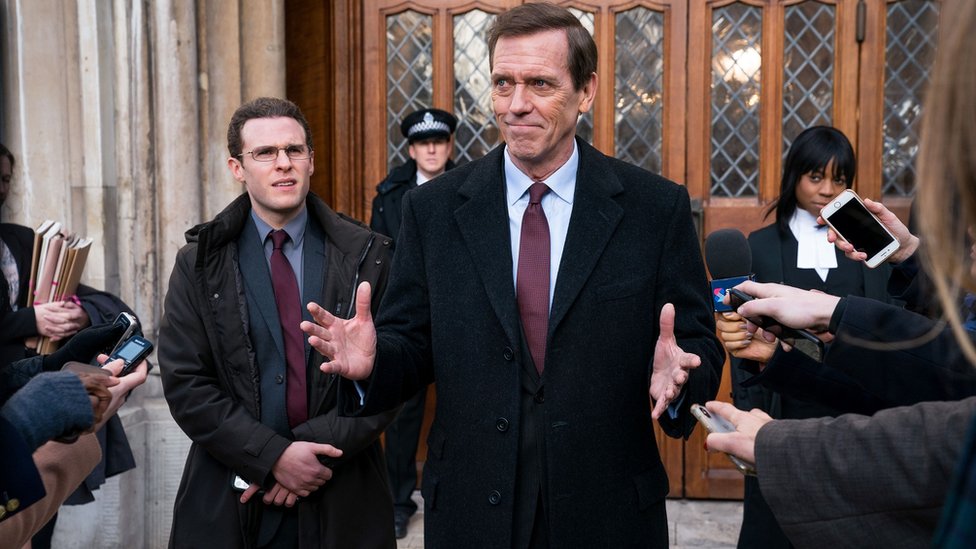
Looking back on the four-episode programme, Roadkill aspires to reward patience, and clever and careful politik. Unfortunately, it instead leaves an aftertaste of a show that pulled victories, defeats, vendettas and heroes from thin air. Spoilers ahead.

The programme starts with a victorious Peter Lawrence, played by Hugh Laurie, leaving court victorious. We’re told who he is very quickly – a rebel, a rulebreaker, and a winner. He takes a chance to fight a libel case, and wins. But after that, and it becomes clear that the public love him far more than his own aides and political peers do. He regularly takes selfies in the street with fans and hosts his own radio talk show, but seeminging everyone around him is quietly plotting his downfall.

His special advisor Duncan, played by Iain De Caestecker, at first seems to be doing the best for him, but is rather literally sleeping with the enemy – the Prime Minister’s own Personal Aide. He is shocked when he finds out that she has been leaking information about Lawrence to the PM, which means that he is either really stupid or really naive, and neither fits his character or the story. His personal driver, Sydney, initially keeps his secrets, but it turns out hates him and is leaking information about him to her girlfriend, who turns into a fairly inconsequential and annoying witness to his previous court case. He has one named aide in his department who is loyal to him, and she barely has a role in the entire story.

And then you get to the Prime Minister herself (Helen McCrory), who is both plotting Lawrence’s downfall, while also giving him a promotion in a cabinet reshuffle instead of just sacking him or keeping him as the Minister for Transport. She presumably fears that he will become a disloyal backbencher if he is gone, but she also gives him what is seen as a trainwreck of a job (Minister for Justice), hoping it destroys him and, what, makes him disloyal to her? What did she expect to happen when she dangled a carrot in front of him and instead beat him with a stick – be grateful? If you don’t trust a minister, you shouldn’t give him new toys to play with. The Prime Minister also has her aforementioned PA attached to her, who is ceaselessly both boring and annoying, as she is painted as a shrewd operator and stays flexible in politics, but has absolutely no personality or pull as she does so. There are more redundant things I could go on at length about, such as his dysfunctional family – daughter and mistress, mainly, or the convoluted and slow story with his other daughter in prison, where we have to first get acquainted with another inmate that only ever stifles the show.

But a far bigger issue is the B-plot of the show. The journalist who he took to court is on a vendetta to prove that she was right about him in her story, suggesting that he is trying to sell off and privatize the NHS. And she has real pull. Played by Sarah Green, she goes to Washington and tries to find witnesses who haven’t been gagged, ino order to back up her story about Peter Lawrence. But, writer David Hare does what seems to be a trend on the BBC at the moment (with it happening in both of Jed Mercurio’s recent shows, Line of Duty and Bodyguard, and in the recent season of Killing Eve), and he kills Greene’s character off halfway through the show. No doubt it is meant to be used for dramatic effect – oh, what a turn up for the books!! But instead, what it does is fucks the story, because it passes her role onto significantly less interesting characters. This journalist’s story now has to be carried by a barrister and her own aide – neither of whom are at all compelling. You have the barrister, Rochelle Madeley (played by Pippa Bennett-Warner), who is flogging around a story which contradicts her last case because… fun, I guess? It’s difficult to tell. And, you have her aide, Luke Strand (Danny Ashok), who compels and guilts her into it after meeting the former journalist once. And the story doesn’t even go anywhere, it fucking dies on its feet. Honestly, its amazing that these two barristers are working on a case that no longer matters to them at all, rather than doing their job and taking another actual case.

Fundamentally, what you’re left with is a politician, Peter Lawrence, who is being attacked from all sides. After looking at the rest of the cast, its time to look at him.

Peter Lawrence is clearly made in the populist image of Boris Johnson, Nigel Farage, and to an extent Donald Trump. He is clearly set up to be a man-of-the-people, a rebel, a jack-the-lad, a bit of a ladies’ man in the past. He has a daughter he doesn’t know about, like Johnson; he has a weekly talkshow, like Farage. The thing is, there are fundamental issues with this in the show. Traditionally, populist leaders surround themselves with fanatics, not snakes, so it makes no real sense to me that he has people everywhere trying to take him down. Is he a masochist? How is a man who is meant to be known for his cult of personality, rather than his political nous, surrounded by people who seemingly hate him.

The other issue is that the show does, eventually, make him the Prime Minister. In the penultimate hour, it is hinted at that he will be the next one in Downing Street after the Prime Minister is fucked by her own aide earlier on (which itself was confusing as to why, since she didn’t really have a problem until she had a problem, if that makes sense). Now, Lawrence being put into power by backbenchers and shady thinktank members wasn’t one of the bad bits, it worked fairly well, because that is the character they built him up as. But these characters that did so only appeared near the end, had only a backstory hinted at (when it could’ve and should’ve been shown), and chose Lawrence over other candidates – of which there must’ve been plenty. This guy just came out of court, after all, why are you putting your money on him!

The greatest crime of the show, though, is that Hugh Laurie’s Peter Lawrence was a passive character. He did nothing to further his own agenda until the last half an hour. I feel that the story can be compared to Kevin Spacey’s Frank Underwood from House of Cards (itself taken from a British version of the same story, although I haven’t seen that one), but Underwood is an active character. He actively bullies people, plots and leaks information. All Lawrence does is get shat on and somehow survive. Hs one redeeming political move is to announce is daughter on television, to own it and not let it be used as a weapon against him. But, every move against the Prime Minister, against the journalist investigating him, and against the newspaper slamming him, comes from elsewhere. He does nothing to further his own gain. Therefore, it is frankly pretty weak that he is put into the Prime Minister-ship after doing fuck all about it. He just has friends in high places that trust him to do a good job, despite no indicator of that in the show.

By the end, it looks like he has sacked his former aide and hired the former Prime Minister’s one, and he has split up with his mistress and embraces his wife again. So what is the lesson here? The story should be that Peter Lawrence has been patient, has made his move and has politik’d his way into Number Ten. What does it actually show? He’s lucky, I guess. If Roadkill did what it promised, Peter Lawrence would resign as a politician and live with his new daughter, because that is the only story that seemed genuine and he did something for himself in. All the others? He was dragged into by his feet, and somehow survived.