“Moral Bankruptcy” and a Disaster Year for Schalke 04

Once, Schalke were one of the best teams in the Bundesliga. Now, they have gone twenty-eight games without a win, a run stretching back to the middle of January, 2020, and is threatening to break the previous record of thirty-two winless games in the 65/66 season. It has been a chaotic year for Schalke, where financial woes and poor decisions behind the scenes have reared their ugly heads on-pitch too – and all of this exacerbated by the COVID-19 pandemic.

The Royal Blues (or Die Konigsblauen, if you’re civilised) started the year with David Wagner as manager, and the 19/20 season had gone well for them up to that point. Their strong opening to the season saw them win four of the first six games, and a further five games after that, before they faced Bayern Munich at the Allianz Stadium on the 25th of January, 2020. They lost 5-0. A drubbing against the perennial champions of the modern Bundesliga era isn’t too noteworthy or surprising, although it is unwanted, but it was the loss that sparked an awful year in football for Schalke. Before that game, they were in 5th position – after holding onto 6th for a while, they ended the 19/20 season in 12th place. Although the big loss to Bayern Munich was sure to have been a factor to their poor finish to the season, it was by no means the only one. They suffered injuries to key players like Salif Sane, Suat Serder and Omar Mascarell, and goals seriously dried up for the end of the campaign, with them only scoring seven goals in the remaining sixteen league games.

Their summer only made things worse, with a bleak finances looming above them. At the end of the 18/19 season, they had announced debts of around €200m, which put them in a dire situation. The worldwide COVID-19 crisis made it worse, with fans no longer being able to come to games, and the club could no longer rely on ticket sales. In an unpopular bid to make ground on their debt, the club let go of some of their lower-paid staff, and refused to refund fans’ season tickets for games that they were not able to watch with COVID restrictions in place – a move that the Ultras Gelsenkirchen group called “moral bankruptcy”. Players took a pay-cut to help the club, but the damage had been done. A number of key players leaving the club for far less than their real value also damaged Schalke’s future: young starting keeper Alexander Nubel left for Bayern Munich on a free transfer, robbing the club or any money they could’ve gotten for him in a transfer; Jonjoe Kenny, their on-loan starting right-back, moved back to his parent club Everton; and midfielder Weston McKennie went to Juventus on loan for a small fee of €4.5m – although this has an option to buy for €18m, which I expect will be activated in the summer. Other regular starters, like Guido Burgstaller and Daniel Caliguiri, also left for free transfers in the summer. They signed one player for money – €1.5m for Goncalo Palencia, although it is only a loan, and they will lose him by next summer. Generating only €4.5m for five of your best players is an incredibly worrying sight, and a sign of things to come.

There were calls for manager David Wagner to be sacked over the summer, but sporting director Jochen Schneider showed faith in his man and stuck with him. Until they lost their first two matches of the season, and he was sacked. It was perhaps unfortunate that they met Bayern Munich again for the season opener, and with former Royal Blue Nubel in goal, they thrashed Schalke 8-0.The next game, Schalke lost at home 3-1 to Werder Bremen, who were in danger of being relegated the year before. That was the game that saw David Wagner leave, and soon after his replacement Manuel Baum came in, along with former Schalke player Naldo as his assistant manager, although things have arguably only gotten worse. Losses and draws continue to stack up for the side, and off-pitch drama is preventing them from making any turnaround at all. Meanwhile, thirty-six year old striker Vedad Ibisevic, who came to the club on a free transfer from Hertha Berlin in the summer, was suspended after a bust-up with Naldo on the training ground, with his contract scheduled to be terminated at the end of the year. However, Schneider says that it was not solely because of the training ground incident, but rather longer-running issues at the club.

Ibisevic is not the only player who has been suspended this season, though. Amine Harit, a star winger, had been suspended by the club after he was substituted in a game versus Wolfsburg and disrespected the manager in frustration. He has since returned to training, and had signed a contract extension at the end of 2019, but his future must be looking less certain now. Furthermore, midfielder Nabil Benteleb’s contract has also been suspended in a bizarre turn of events. In the morning of November 24st, the club tweeted out Bentaleb’s birthday – but by the end of the day, they had deleted that and instead suspended the player for disciplinary reasons, and told him he could leave for a new club by the summer at the latest. Further injuries have hampered the side, with both goalkeepers Frederick Ronnow and Ralph Fahrmann unable to play, forcing them to start third-choice Michael Langer in a 3-0 loss to Wolfsburg.

Schalke are stuck to the bottom of the Bundesliga table, with relegation a very real possibility for the side that had been active in the Champions League in the previous decade, and even runners up in the 17/18 season. Their last game of the season before the winter break is on the 19th of December to Arminia Bielefeld, who are only two places above them at 16th, and have won only twice in twelve games. Even against weaker opponents, it looks doubtful right now that Schalke will get a win from the game, such has been their appalling year. If they continue to not win games, then the record-breaking fixture – the thirty-third game without a league win – would be on the 20th of January, 2021 versus Koln at home. If they fail to win that too, they will be making history for all the worst reasons, and relegation will surely be the future of Schalke, leaving the Bundesliga for the first time since the 1990/1991 season.
Catching the opening of Ligue 1 football

I won’t be the first writer to tell you how different football is right now. In the space of six months, the game, just like the world, has been turned on its head. And while a lot of the confusion and disruption has calmed down now – the 2019/20 Ligue 1 season was cut short, so it has been an extended break rather than the squashed preseason you’ll find in the Premier League – there are still remains of the Covid pandemic damage. Specifically, the strange lack of fans in stadia. Some are allowed into select games, despite the rising second wave of coronavirus in France, but others are still completely empty, like you will find elsewhere in Europe’s top leagues. However, while there are difficulties, there are also opportunities. Opportunities for me, in particular, to watch more live games on TV.

I’ve watched more live football in the last week than I ever have in that amount of time. This has come form a combination of: more free time, having finished fifteen years of education and graduated as of this past July; and the wider availability of games that can be watched, specifically in the Premier League. The absence of fans has allowed the 3pm broadcast ban to be waived, to allow eager fans to still see their teams, and not have the top-flight games to be played for simply the coaching staff to watch.

However, despite the options of English, German and Spanish football to watch (I have yet to see an Italian game broadcast, although I assume that won’t be long), I have been drawn to France’s Ligue 1. The French top flight has sometimes been ridiculed by English fans as a “farmer’s league”, I think due to both the strangle-hold PSG has had on the title for the last decade or so, as well as their relatively poor performances in European competitions (both of which, for what its worth, I would argue are wide of the mark as all of France, Germany and Italy have had poor patches in Europe in that time, as well as hegemonic league winners – and in fact, PSG reached the Champions League final last season, and the likes of Lyon and Monaco have had strong showings in in the competition lately too). This perceived low quality across the board isn’t something I have necessarily seen, though, and I have found myself enjoying French football the most of those that I’ve watched.

However, I have watched half a dozen games at the beginning of a season, and no team more than twice – so I feel I don’t have credibility to deep-dive into a team or player, yet. But, I want to write, to find an angle. Instead, then, I will present my thoughts on a few teams that have left a mark on me.

Faltering French Champions

The Champions League final can be a cruel, cruel mistress. In recent memory, two English teams have lost their managers only six months after reaching a final – Roberto Di Matteo in 2012 after he won the competition with Chelsea, and Mauricio Pochettino in 2019, losing the final to Liverpool, and being sacked by Tottenham Hotspur less than six months later. And while they he is still in the job, Thomas Tuchel’s Paris Saint-Germain have not been faring well after their own final appearance last season. Known for winning the French league title by dozens of points each season, they lost their first two games of the campaign already, first to relative minnows Lens, and then to former heavyweights Marseille. They have since won the next two games, and are in a mid table position at the time of writing. But, I watched their second loss, versus Marseille, so that’s what I’ll talk about.

There was certainly a lot of misfortune for PSG in the game, as they missed easy chances to score by scuffing their shots wide of the post, or losing out to a superb Mandanda in goal (more on him later). Furthermore, they had been going through a bit of a covid crisis, missing the likes of Mbappe and Marquinhos who had to be isolated from the squad to prevent spreading it. Still, standout Neymar, Di Maria and Verratti started, and the rest of the team should have more than enough quality to do better than their eventual 1-0. Neymar especially was silent on the left hand side, being manhandled by Marseille left-back Sakai as he struggled to get into any rhythm According to Whoscored.com, Neymar had the most shots of the game at six – and all of them were poor and in anger. Most of the PSG play instead went down the right hand side, where new acquisition Florenzi, from Roma, was a bright spark, but he had too much to do. Di Maria up front dropped deep to effect the game, to little effect, while I’m not sure if I spotted striker Sarabia on the ball at all. The midfield three of Gueye, Herrera and Verratti did well to control the game, but it was of little use with an attacking force so poor.

Of course, the major talking points of the game came in the last few minutes. Because of an off-the-ball incident, substitutes Paredes and Benedetto got into a scrap, ending in the red cards of those two, Amavi for Marseille, and Kurzawa and Neymar form PSG. It was all great fun, watching these footballers push each other around like they arent being paid thousands on thousands to play football and try to *avoid* that sort of incident. Since then, Neymar has since alleged that it was due to a racist remark from Benedetto, which is obviously awful and takes away a bit of the innicent fun in footballer handbags.

Benoit Badiashile: Monaco’s Indomitable Defender

So, between you and me, Badiashile was, in fact, slightly domitable. But, I was so impressed with him, I thought I would run with it anyway.

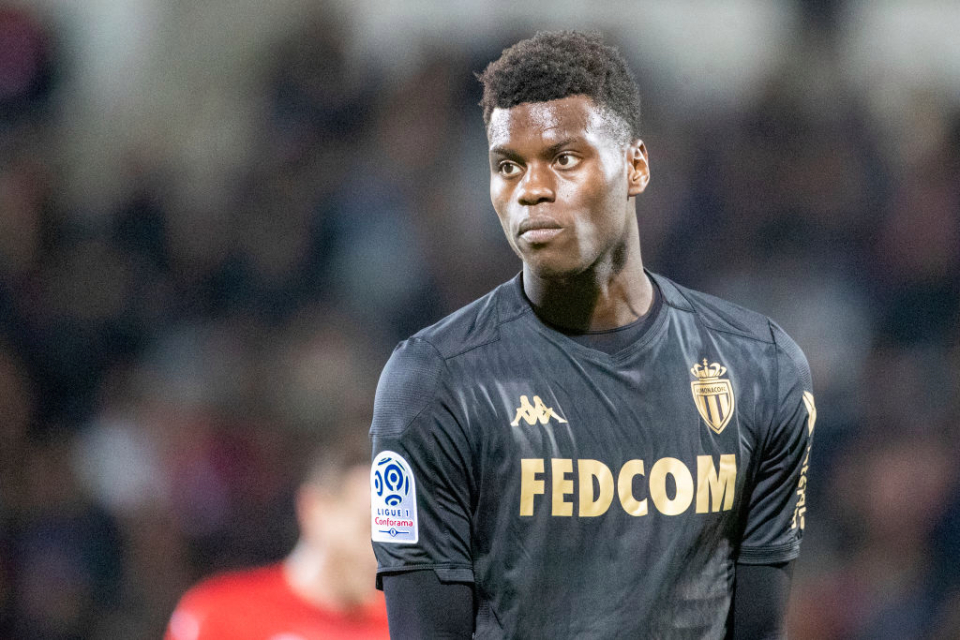
Watching the first half of the Monaco vs Rennes game, it was no surprise that Badiashile, aged 19, has been rumoured as a transfer target for Manchester United. He had a huge presence in the game, keeping Rennes at bay for the first eighty minutes with supreme stops and tackles. Wissam Ben Yedder opened the scoring early by getting on the end of a corner ball and smashing it home, but from then on Monaco allowed Rennes to seize control, and they relied on their defence. Time and time again, Badiashile was there to track a player and make a vital block for a shot on goal, putting in three tackles in the game. He got himself in the way of searching crosses into the box, and he was supreme in the air, winning four aerial duels in the process. Moreover, he was a good passer to boot with a 91% success rate, although they were mostly safe, and not entirely indicative of quality passes for the side.

However, Monaco let themselves go in the last ten minutes of the fixture, due to a poor and porous midfield in front of Badiashile. Steven N’Zonzi, not known for his scoring talents, sprayed the ball out wide and advanced into the box, ready to receive a cross from left back Truffert. With no-one tracking him into the box, N’Zonzi had a free header on goal, placed perfectly for him to poke home. This was Adrien Truffert’s, aged eighteen, first appearence of the season, and he made it his own when he scored the winner in the 91st minute with a long ranged beauty from outside of the box, with no real pressure put on him from the midfield. Monaco suffered their first defeat of the season, but despite their loss Benoit Badiashile greatly impressed.

Mandanda: The King of Marseille

I watched two Marseille games of the past week, and all I could think was how good Steve Mandanda was. Despite a poor PSG side, Mandanda was probably the difference maker in that clash, who was the largest reason they kept a clean sheet, although Payet’s free-kick assist to Thauvin’s tap-in was the winner. Mandanda was there for each of the four shots on goal, from close-range to long distance, from fourteen shots in total from the French champions. The Marseille defence was kept compact, pressing from the midfield and tracking the superstar front three of PSG with a dedicated defensive system, leaving Mandanda to deal with shots that mostly came from headers, long shots and the few quality chances PSG fashioned for themselves. Increasingly more desperate, Mandanda’s Marseille remained in control throughout, until everyone lost control in the brawl at the end.

Despite the win versus PSG, Marseille were flat and toothless in the other game I watched – their 1-1 draw against Lille. Lille, frankly, deserved to win the tie, with the likes of Jose Fonte, Lucas Araujo and Buyak Yilmaz performing better than the scoreline suggests. The latter, especially, had a tough time with the linesman as the offside flag was constantly ruled against him, despite his pleas of innocence. It was Araujo that opened the scoring against Mandanda, with a strike at the beginning of the second half. However, this was only one of Araujo’s six shots, and Mandanda managed to save six shots of the fourteen against him. It was Germain, the experienced striker who has also turned out for league winners Monaco, and Nice in recent times, to equalize the game for Marseille from a cross, to save the blushes of a poor and frankly undeserving home side.

I also watched Lyon vs Nimes

It ended 0-0, and frankly I cannot remember much about the game. It was very poor, and boring. You can’t win them all, eh?

New Blood Finally Breaking Through in Evolving Cherries Side

Since their arrival to the English top flight in the 15/16 season, AFC Bournemouth have been a side known for their core of English leaders and veterans. There were players in the starting eleven of wins over some of the top sides that’d been with the squad since their journey up the pyramid from League One, with the likes of Steve Cook, Simon Francis, Charlie Daniels and Marc Pugh as stalwarts for the Cherries. The core of the side, also including players such as Harry Arter, Dan Gosling, Andrew Surman and Adam Smith, have faced down and won against the biggest teams in the country, stealing points from Arsenal, Manchester United, Chelsea and Liverpool on their road to Premier League stability. Eddie Howe’s men have repaid his faith by the buckets and reinvented themselves as players good enough to throw down with the best in the country.

But, as time goes on, changes have had to be made. Going into their fifth consecutive Premier League season, the Bournemouth old guard have had to face competition for spots, injury nightmares, and how to maintain their own longevity as they move past their peak footballing years. Marc Pugh and Harry Arter, aged 32 and 29 respectively (at the time of writing), has left for pastures new in the Championship form a lack of playing time. Francis and Daniels both have had to fight back against long term injuries which has ruled them out for months at a time – alongside Callum Wilson, another pre-Premier League player, whose only recently been able to fully show his quality after a series of unfortunate injuries plagued his early top flight seasons. New blood in the midfield has made Surman and Gosling fight for their spots at the nexus of the Cherries side, with the likes of Lewis Cook, Jefferson Lerma and Phillip Billing challenging their reign. Steve Cook is the one true member of the Old Guard that has consistently kept his place in the side, seeing out the challenge for his spot from young Welshman Chris Mepham as he pairs Nathan Ake week in and week out.

Despite a need for change and fresh faces in the side, the Bournemouth transfer record in the Premier League era has been suspect to say the least. Eddie Howe’s recruitment team have obviously been keen to bring in British blood to the side, which has led to some suspect signings like Jordon Ibe for £16m, Benik Afobe for £12m, Brad Smith for £3m, and Marc Wilson for £3m, who they loaned back to West Bromwich Albion six months later, and released on a free a year after signing. They also signed a 34 year old Jermain Defoe for free, but on a large three year contract when the player was clearly past his best, scoring only four in thirty four appearances at Dean Court.

That is not to say that they have been devoid of quality incomings, however, and have steadily improved their signings year-on-year. Highlights have been the aforementioned Lewis Cook and Chris Mepham, 22 and 21 years old respectively, with the former being the u-20 England Captain while on the South Coast, and both of them already capped for their national teams – despite his young age, Mepham already looks a regular in the Welsh setup. David Brooks comes in with a similar profile: a young Welshman from the Championship eager to prove himself, making his way both into the Bournemouth and Welsh sides since his move. Eddie Howe hasn’t just stuck to British talent, though, and has brought in keen signings such as Jefferson Lerma, Philip Billing, Josh King and Nathan Ake, making the first eleven spots fiercely competitive. Lloyd Kelly, Jack Stacey and Arnaud Danjuma are other signings who have promise, but haven’t had a run in the first team at the time of writing.

While hit-and-miss transfers one staple of the side, a loose defence has often been another. According to stats at footystats.org, Bournemouth conceded 1.76 goals per game in the 15/16 season, 1.76 again in 16/17, 1.61 in 17/18 and 1.84 in 18/19, a worryingly high amount. Furthermore, in the same seasons, according to footcharts.co.uk, they conceded 4.05, 4.97, 4.63, and 4.61 shots on target per game. The Cherries have been lauded as an exciting outfit, but not a secure one at the back, with defensive errors from the goalkeeper and defense all too common. Keepers Asmir Begovic and Artur Boruc have unfortunately been all too susceptible to mistakes, increasing the threat to Bournemouth whenever they don’t have the ball.

SeasonShots on target conceded per gameGoals conceded per game
15/164.051.76
16/174.971.76
17/184.631/61
18/194.611.84

However, new players and a fresh look to the formation have shown promise in the 19/20 season. And be warned – stat overload incoming.

Aaron Ramsdale

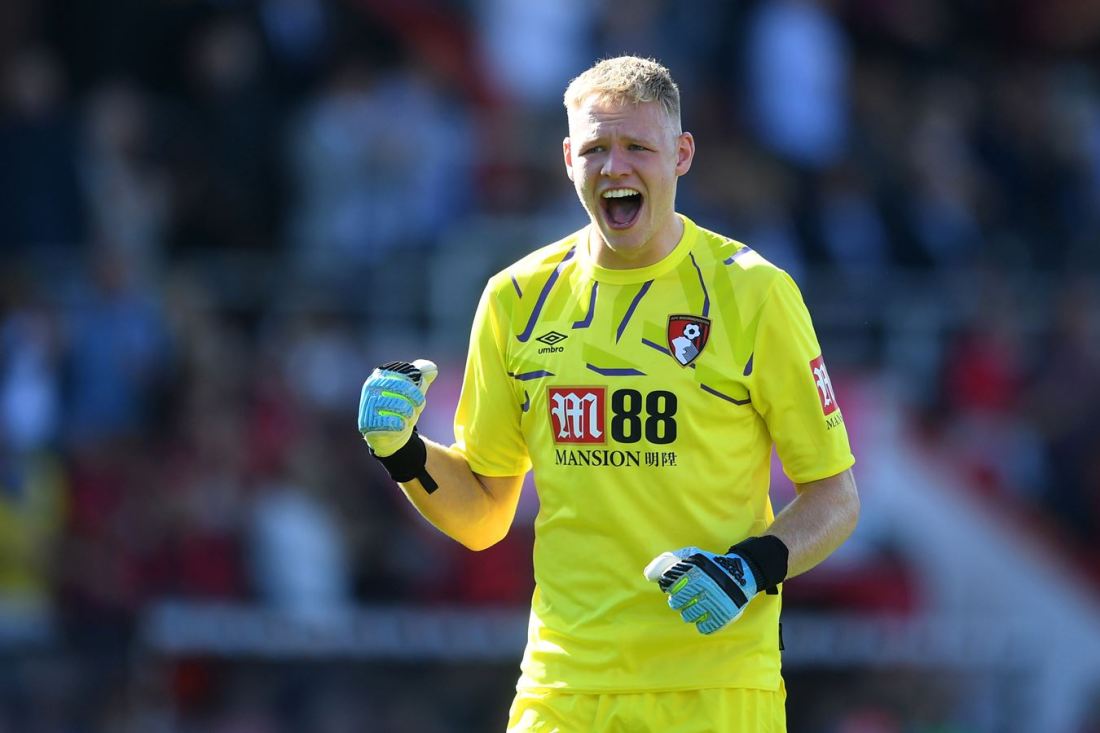
With the goalkeeper issue ever prevalent at the end of last season, change had to be made. Young Irishman Mark Travers made a handful of appearances and did well, although still found the side on the wrong end of a hiding against Crystal Palace, shipping five on the last day of the season. With Begovic sent on loan to Qarabag and Boruc relegated to the third keeper position, it was Aaron Ramsdale that challenged Travers and took the first-team spot for the 19/20 at Dean Court. The young Englishman had played in Leagues One and Two on loan from Bournemouth, but this was his first season playing at the top flight – he was an unknown quantity. Despite the nervousness, he has been a revelation, settling the backline and looking self-assured between the sticks.

Ten games into the season, Bournemouth have had 4.3 shots on target against them per game, but only 1.3 goals conceded, with Ramsdale making 3.1 saves a game (whoscored.com) – 32 saves in total, joint fourth highest in the Premier League.  This is an improvement on Begovic’s numbers the two seasons before, coming in at only 2.9 and 2.5 saves per game in 17/18 and 18/19 respectively, as well as Artur Boruc’s 2.5 in the 15/16 season. However, only ten games into the season, Ramsdale’s numbers might decrease through the campaign.

Ramsdale makes 26.6 passes per game (9th in the league for players with 5+ appearances), although 0.4 are inaccurate short passes, the second highest in the league, from 9.1 accurate short passes, showing that he isn’t afraid to play out from the back, but it is still an area to improve upon. However, he isn’t opposed to playing the ball longer, either, shown in the assist he picked up when Callum Wilson capitalised on a Ramsdale long ball into the Southampton half when the Cherries won 3-1. Ramsdale has been a confident and steady hand at the heart of the Bournemouth defence, and at only 21 will only get better.

Philip Billing

Billing came to Bournemouth from the relegated Huddersfield side, to help fill a hole in the midfield. His signing served two purposes – to account for the injury to Lewis Cook at the time and in the first team picture, but also to improve the Cherries defensive game, too, which had been all too porous. The fact that Billing is only 23 years old is an added bonus. For the majority of the 19/20 season so far, he has partnered the aggressive Jefferson Lerma in midfield, and with 2.7 tackles per game for Huddersfield that season, it’s clear why in a midfield that needs to protect the defence first, and pass along to the wings in the attacking phase of their game.

Billing has raced out of the blocks for Bournemouth, imprinting his mark on just about every game. He makes 4.9 defensive actions per game (2.3 tackles and 2.6 interceptions), a degree higher than Lerma’s 3.3 (1.2 and 2.1) beside him – although he does commit 0.4 more fouls per game than the Colombian, and is dribbled past 0.6 more times a match. His and Lerma’s interception numbers are the third and fifth highest in the league respectively for central midfielders, showing how crucial they are to Bournemouth’s defensive qualities.

However, he also offers more passes per game (43.8 v 40.7) and key passes per game (0.4 vs 0.3) than Lerma, and has an assist to his name from the cut back into the box for Harry Wilson’s goal against Southampton. While these numbers don’t stand up compared to Lewis Cook’s own in the 17/18 campaign (42.3 passes and 1 key pass(es) per game, two assists), he has not played consistently since then and will need to find his feet in the side before he rivals Billing as Bournemouth’s most influential central midfielder. Billing finds some freedom in the midfield by making 1.2 dribbles each game, and will pop up outside of the opposition box to offer an extra body in attack.

Diego Rico

Rico was brought to Bournemouth in the summer of 2018 as an exciting option at the left back berth, to compete with Charlie Daniels for the spot. He came to the English club after a strong season with Leganes in Spain, and he was keen to impress new boss Eddie Howe. Unfortunately, his 18/19 campaign was torrid, making only five starts in the league and suffering defensively, much like the rest of the squad. There was no room to accommodate and bring him up to speed, so he sat out much of the season. However, with Daniels’ early injury at the beginning of the 19/020 season, and Lloyd Kelly’s existing injury, the left back position was Rico’s for the taking – Ake had filled in there, but he is far too crucial at centre back.

Fortunes have turned for Rico in the new season, and he has gone from strength to strength. While his defensive numbers still need to be improved upon – being dribbled past 1.6 times a game and committing a foul almost once a match – it is going forward that has seen Rico flourish. The Spaniard offers 1.3 long passes per game, which is second only to Trent Alexander-Arnold’s 1.8, and his 2.1 key passes per game is ninth in the league. He performs 1.7 crosses per game (third in the league), and his 1.3 successful corners per game is the highest in the Premier League, with one of his two assists coming from crosses, planting it on the head of Nathan Ake who scored against Southampton. Assisting in two of Bournemouth’s three wins this season, Rico is proving to be a reliable option to keep the Cherries attack ticking over.